


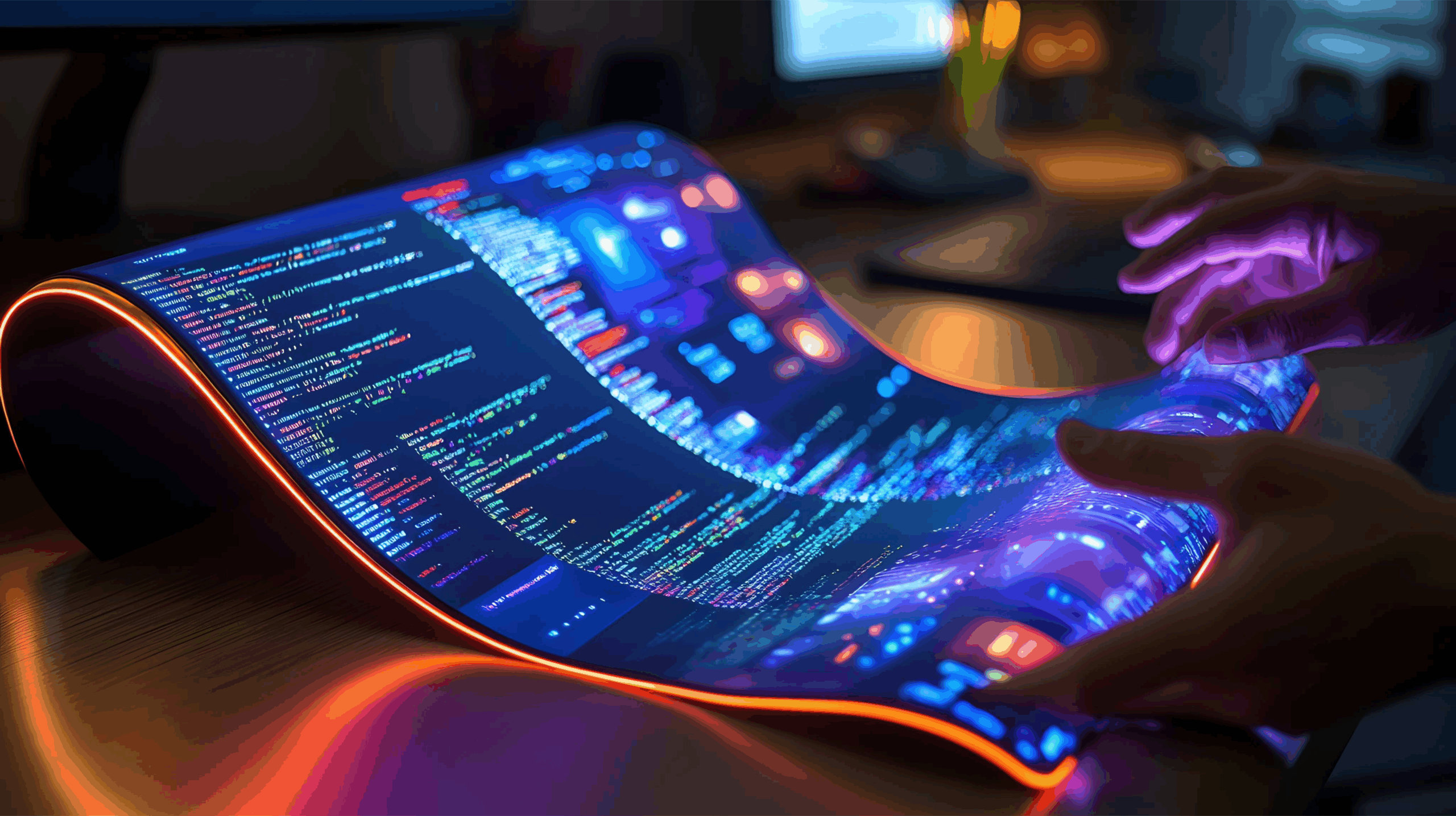
Every display starts the same way, with light generated inside a tightly packed stack of materials.
But not all of that light makes it out. A surprising amount never leaves the device at all. For years, that loss was simply part of the system, something engineers worked around rather than solved.
That’s starting to change.
In 2026, the next step isn’t about generating more light, but about what happens after it’s created. How it moves, where it gets lost, and how efficiently it can be extracted is now the real challenge.
Why Display Manufacturing Is Hitting a Wall
The pressure is building across the industry.
OLED is expanding into larger formats and automotive displays, but efficiency gains are slowing.
MicroLED still holds promise, but scaling remains difficult. At the same time, brightness demands keep rising, especially in automotive and AR, while power constraints and thermal stress remain constant.
The bottleneck is becoming harder to ignore. It’s not generating light anymore. It’s getting it out.
What High-Index Materials Enable Across Display Applications
High-refractive-index materials help solve this by increasing refractive index contrast, allowing more light to escape instead of being trapped. The result is higher brightness and better efficiency without increasing power.
What’s changing is how these materials are used across display systems.
In OLED displays, inkjettable PixJet® enables microlens arrays and planarization layers that improve light extraction at the sub-pixel level, without disrupting existing manufacturing.
In XR devices, display performance depends on how light moves through the system, not just the panel itself.
PixMicro™ supports micro-imprinted optical structures used in sensing and imaging within these displays, improving light capture and overall system efficiency.
At the same time, PixNIL® enables nanoimprinted waveguides and diffractive structures that guide display light to the eye. These layers directly impact brightness, field of view, and image clarity in AR and XR systems.
Across all of these, the goal is simple: use more of the light that’s already being generated.
Why Nanocrystals Make It Possible
At the center of these materials are nanocrystals, typically engineered in the 3–20 nm range. At this scale, they avoid scattering visible light, keeping coatings clear while still increasing refractive index.
Getting that balance right is what makes these materials work.
Poor uniformity leads to haze, instability leads to aggregation, and surface chemistry determines whether the material performs in real processing conditions.
Pixelligent’s platform focuses on controlling these variables together, enabling high transparency, low haze, and stable performance across both inkjet and nanoimprint processes.
It’s a level of control that turns materials from passive layers into active contributors to display performance.
Conclusion
Display manufacturing is shifting, and the change is happening at the material level.
Inkjettable, micro-imprintable, and nanoimprintable high-index materials are giving manufacturers new ways to improve brightness and efficiency across OLED and XR systems without reworking production lines.
The next generation of displays will not be defined by how much light they can produce, but by how precisely they can control, extract, and deliver it.
To learn more about Pixelligent’s Designer Compounds®, contact our team today.